
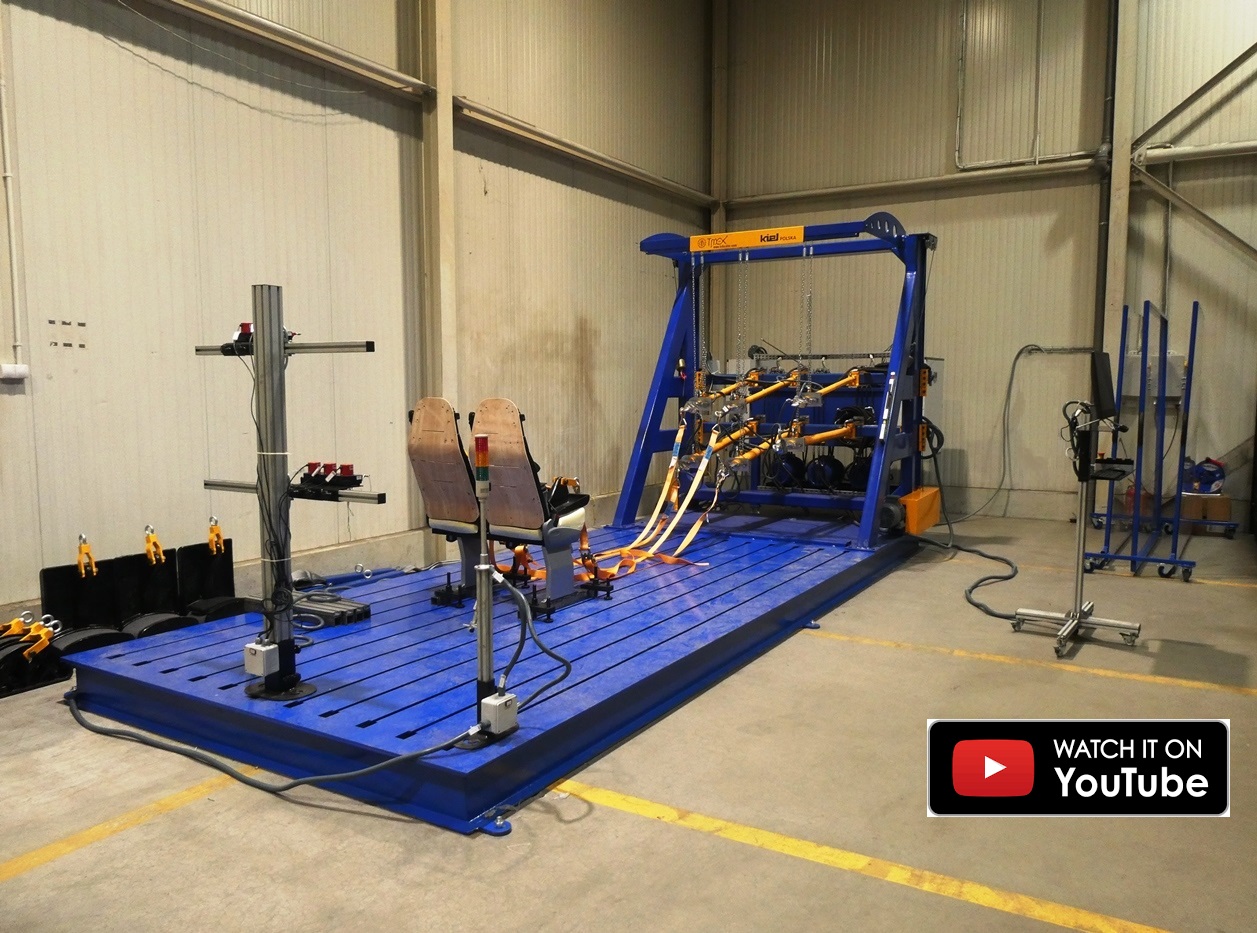
Static Test Station
RECE R14, R80 and related FMVSS standards

This station performs static strength tests under these standards on single, 2-, 3- or 5-seat automotive seats with 2-point or 3-point belts (M1, M2, M3, plastic and wheelchair-accessible types), seat belts, anchorages and other automotive components.
Bed size, number of hydraulic cylinders (2 to 10), force direction (tension, compression or both), force range of up to 50 kN per cylinder and cylinder speeds are configured to customer requirements.
Specifications
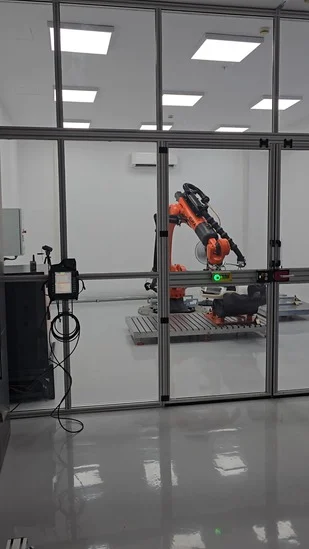
Ingress/Egress Robotic Test Cell
A first in Türkiye
Commissioned by TMEX, this cell uses KUKA's Occubot module, dedicated to ingress/egress testing, to simulate a person sitting down on and getting up from a seat with a robotic manipulator capable of force control along trajectory planes.
In their technical specifications, automotive OEMs use load mat sensors to determine the force fields and vectors that people of average demographic characteristics apply to the seat surface when sitting down and getting up, and share these force curves with their contracted suppliers. Using a 3-axis force sensor at the end of the 6th axis, the Occubot module on the KUKA robot adapts within the trajectory plane whenever the target force is not reached, so that it follows this force tensor-time curve.
Specifications
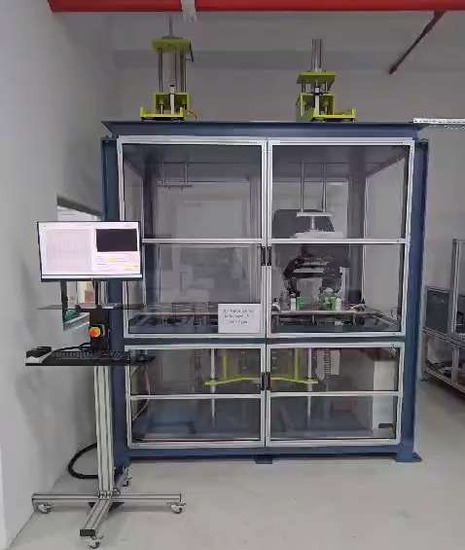
Y/Z Road Durability Station
Ford, Renault and Stellantis
Our new-generation Y/Z road durability test station, used for these OEMs, simulates road conditions in three operating modes. It quantifies the deformation of automotive components, such as the foam of a passenger car seat, and identifies fasteners prone to loosening and the extent of loosening.
For road simulation
- Sinusoidal motion in the Y and Z axes
- Sinusoidal motion in the Z axis only
- Road data playback in the Z axis
Specifications
Specifations
Durability & Fatigue Test Station
Servo-cylinder technology
Built on the precision of servo cylinders, this station was developed for durability, fatigue and endurance testing of general-purpose automotive components (seats, armrests, backrests, seat cushions, footrests, map pockets, etc.) and industrial products.
The axes can run independently, sequentially or in synchronized mode. In sequential mode, for example, the armrest, then the footrest and backrest can be tested in turn at the appropriate force and position values. Applying simultaneous sinusoidal and absolute sinusoidal forces on 4 axes under specific train seat standards is truly challenging, and TMEX has accomplished it.
On request, single- or dual-axis designs are available with different stroke lengths, speeds and force ranges.


Energy Dissipation & Impact Test Station
ECE R21 and R25 standards
For energy dissipation testing under these standards, there are 3 topologies: free fall, sled-guided free fall and fluid-driven pendulum.
In free-fall topologies, brief friction right after impact, followed by rebound and a second hit, is likely, and the velocity cannot be measured exactly.
In the pendulum-type impact test station developed by TMEX, a servo drive with EtherCAT communication and a central encoder delivers a single, clean impulse. Impact velocity is measured accurately and precisely at millisecond resolution.
Specifications
Dynamic Test Station
ECE R16
Under ECE R16, this station determines the seat belt's dynamic locking position during a crash with sub-micron precision, and performs retractor durability, locking force and strength tests.
With its hybrid design, it performs all 3 test types with the same mechanical structure, software interface and electrical system.
Specifications

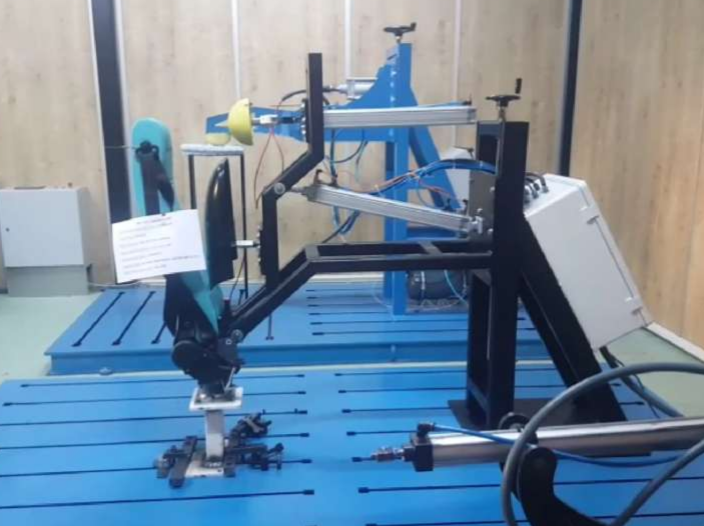
Strength Test Station
ECE R17 + fatigue
For these tests, the station can be designed for single, 2- or 3-seat automotive seats. With servo axes, precision load cells and 0.2%-accuracy torque sensors at the H-point, our new topology enables more precise and more varied tests.
During the test, the backrest fixture first pushes back around the R-point until a torque of 373 / 530 Nm is reached; the upper servo cylinder then bears on the head restraint and applies a force of 890 N.
Specifications
Break-in & Measurement Test Station
Modular in-line unit
Designed as a modular in-line unit, this station performs the break-in required by the material properties of automotive door hinges, followed by 100% measurement.
Özellikler

Tractor & Cab Test Station
ECE R58, R73 and R93 standards
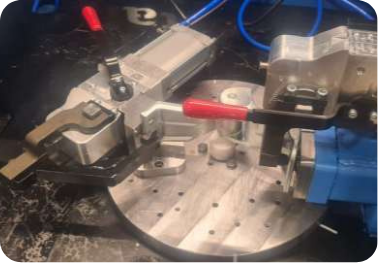
In test equipment for these standards and 89/173/EEC, 4 types of force and energy tests of up to 200 kN are performed with 500 mm stroke cylinders.
Moving a cylinder by 1 mm against a specimen of variable material and elasticity, at forces of up to 200 kN, demonstrates our superior control performance.
Remote monitoring via a connected webcam, automatic reports in a format agreed with the customer, date-stamped test folders and automatic cloud backup of all folder contents are standard features, as on our other test equipment.
Specifications
Rubbing Test Station
Ford ST0809
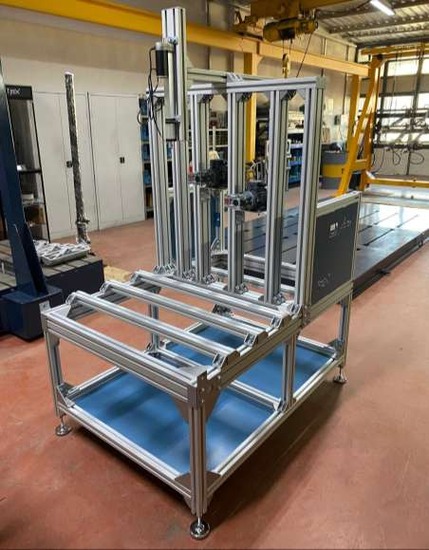
In this station, designed for seat fatigue and aging tests to automotive manufacturers' own standards, automotive seats are humidified and heated under load in a controlled way. Single or double seats can be tested.
Specifications
Rollover Test Station
ECE R66, R107 and R111 standards
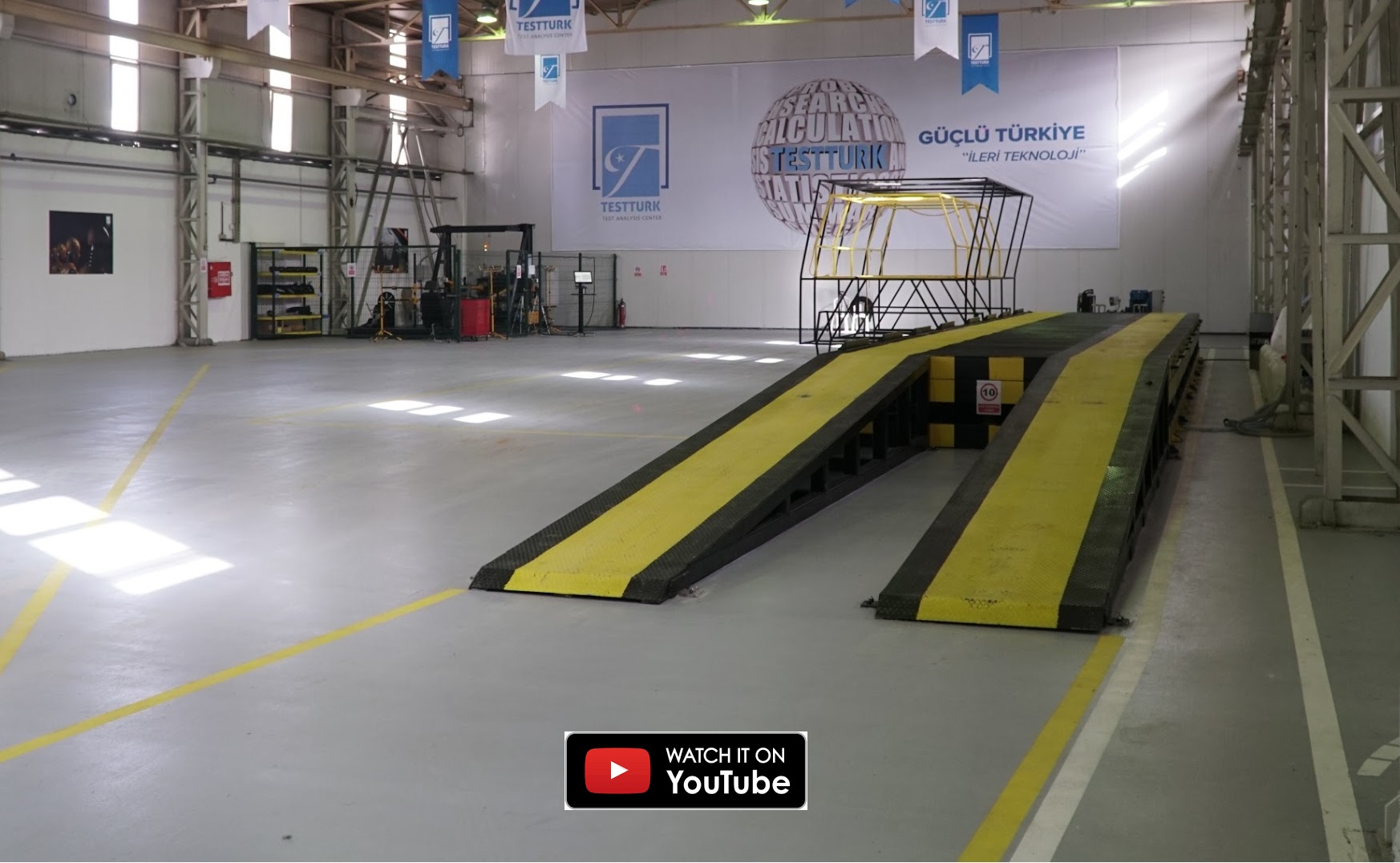
Under these standards, this station is used to test tanks and tankers of category N and O vehicles with a test pressure below 4 bar, as well as buses and coaches.
Considering the risks of telescopic cylinders under heavy, unbalanced loads and the excavation work required for recessed cylinders, the design includes a ramp for the vehicle to drive onto the platform.
A shared-responsibility business model can be considered within the project.
Specifications
Specifications
Vibration Test Station
DIN 45678
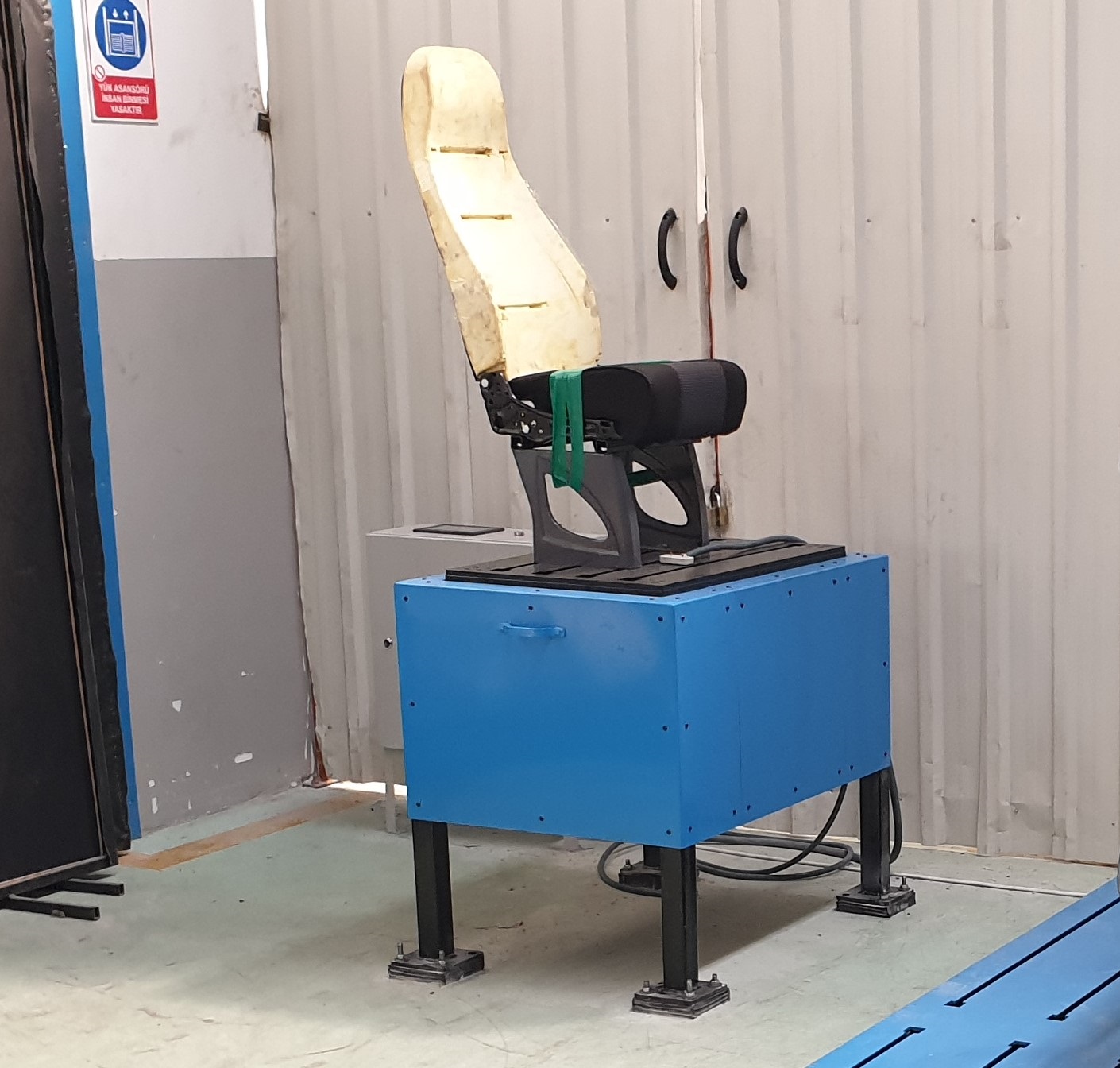
Wherever vibration durability measurement is required under DIN 45678 or similar standards, this station is used on vehicle seats, bolted automotive parts and parts whose resonance frequency must be determined.
There are 2 test types: resonance frequency determination and vibration durability.
Target fixed frequency, run time, visual inspection interval and, for resonance tests, the frequency sweep are entered on the touchscreen. The software records accelerometer data from the table and the specimen.
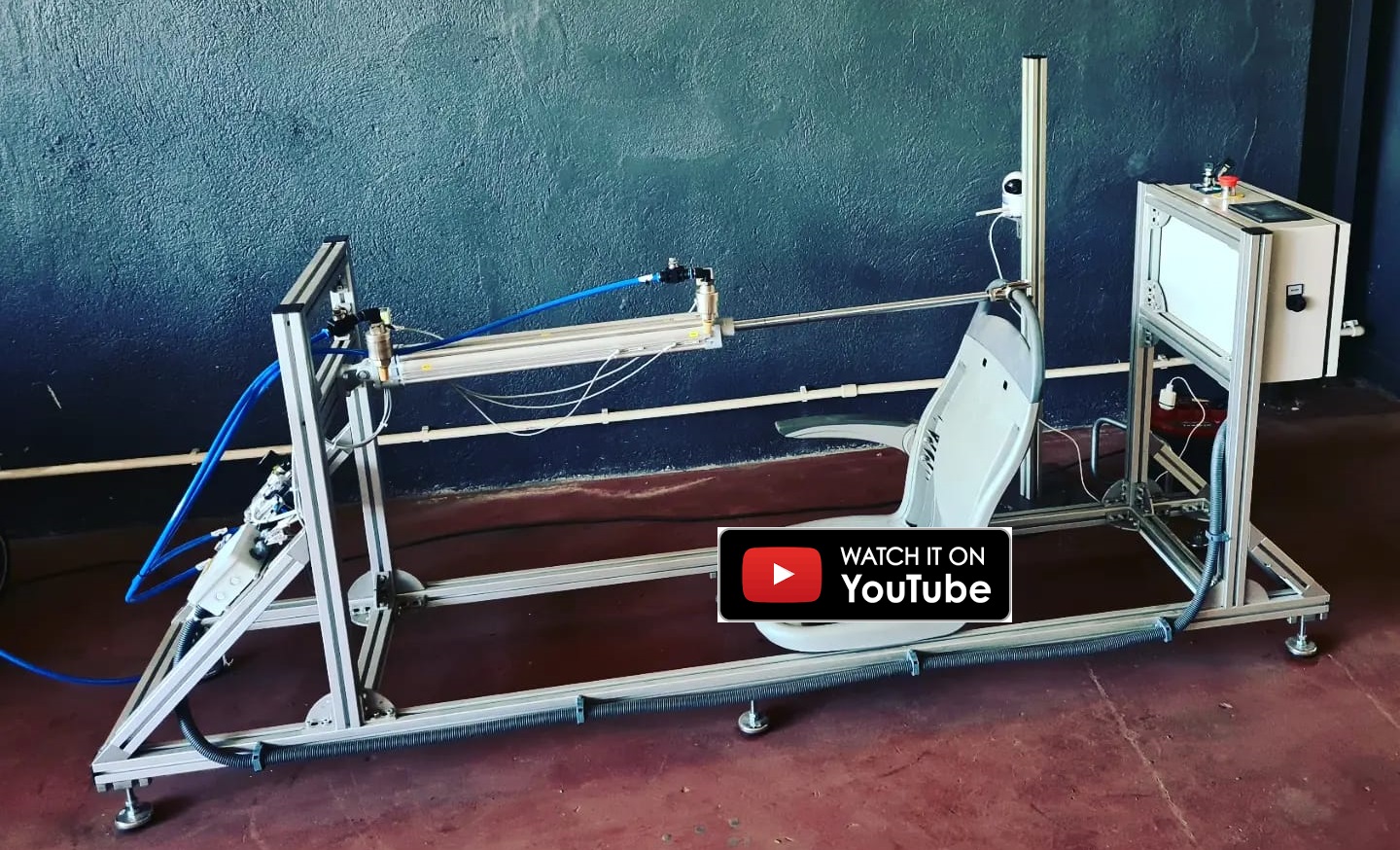
Digital Eco-Series Pneumatic
Durability Test Station
Special-purpose durability and fatigue testers typically use smart relays, which limit the target cycle count to around 30,000 and require tedious entry with small buttons. In this model, TMEX instead uses a cost-effective touchscreen and controller solution.
Besides the target cycle count, this allows manual visual inspection intervals (for example, every 50,000 cycles) to be entered, even for counts in the millions.